Across the years I have encountered quite some different methods of making and fixing dreadlocks. Most of the differences I noticed between the various techniques, were, in fact, a result of the loctician's attitude. We are all different and as such we all do things in a different way, according to our trails.
Being different creates variety, and that is, after all, one of the beauties of life. But with so much variety, we need to learn to understand why people do things differently. Are they different because they are creative and surprisingly interesting and want to inspire others? Or are they different because they are lazy and mediocre and have no wish to inspire?


The answer is up to you of course. We have the eyes and the mind to see and judge what is good and what is not.
The purpose of today's post is not about good or bad, however - it is about distinguishing a variety of 'good' methods, in accordance with the type of hair. And even though there are many different types of hair, in the world of dreadlocks generally, the categories here are pretty straight forward:
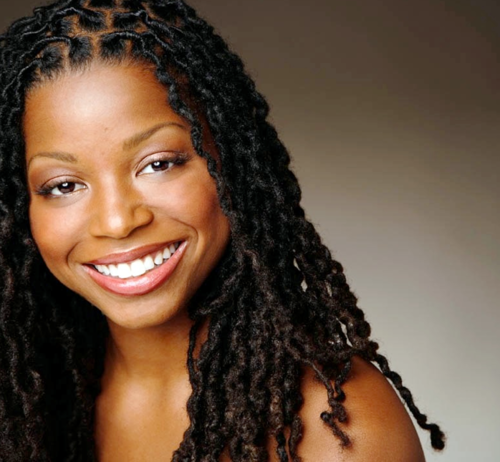
African Hair
and
Caucasian/Asian Hair

The Spin & Pin method or the Twist method

The range of sizes that work with African hair is incredible, from tiny baby locks to huge rasta ones. The length of the hair to use this method needs to be long enough to be twisted together and then clipped, at least 2 inches.
The Strand Twist method

If the hair is longer than 5 inches, then the strand twist method may be more suitable. This is very similar to the Spin & Pin method as it uses the sectioning and the clipping of each section, but instead of twisting the same section over and over again, the twisting takes place with two sections together, each crossing upon each other.
This and the previously mentioned methods only work well with this one hair type; highly textured African hair. Caucasians and Asians shouldn't even
attempt this method.
The advantages of the Twist & Pin are that you have full control over the size you want for your dreads and that is not very much time-consuming to do.
The disadvantage is that the dreads are not locked tightly on the inside and will require very regular maintenance and daily hand palming.

The following methods are suitable for all types of hair, but each will work best with a particular type of hair, and most have interesting pros and cons. The first step is always to part the hair. Note that professional locticians need not section all the hair from the start and securing them with rubber bands. They would have enough experience to part a section at a time, usually starting from the back part.
The Backcombing method

This is one of the quickest and simplest way to make dreads, and therefore, its the cheapest, not only in monetary terms but also cheap in result.
The strand of hair is back-combed with a comb, starting close to the scalp and combing towards the scalp, and repeatedly the same way in the middle of the strand and at the tip. Eventually the hair packs up and becomes the locks. Usually the tips are secured with a rubber band that can be removed once the lock has matured enough.
The advantages of this method is that the dreadlocks reaches maturity early and is much faster to make than most other methods.
The greatest disadvantage of the backcombing method is that it shortens the length of the hair considerably, usually by half. Other disadvantages include the fact that you have little control over the size of the locks. Even if you use a comb with very thin teeth, the hair is only locked on the outside part without any tight knots on the inside. For this reason the hair requires the aid of hair wax, which ultimately makes the hair looks ugly, messy, dirty and smelly.
The Neglect method

For this method you pretty much need nothing. Except neglecting your hair. Ideally you should wash it every now and then, obviously not using any conditioner or any cream or oil, but some people avoid this altogether. It takes time, usually 3 years unless you are lucky enough to have very textured hair.
The advantage is that it costs you nothing.
The disadvantage is that it takes years to see a good quality result, and absolutely no control over your dreads being huge or flat or skinny. You will need to rip the hair that grows over multiple dreads and that might hurt. It will require constant palm rolling with the hope of shaping them how you want them to be.
The Woolen Garment method
For this you will need a wool sweater or a wool hat to rub in circles on the top of your head and after around 15 minutes knots will start taking shape. There is no possibility of separating the hair with this method so after you knot your hair you need to either rip them apart with your fingers or cut them with a scissors.
The advantage is that you can do it yourself, in the comfort of your own room with the sole help of a woolen garment.
The disadvantages are that it is very painful, especially if you don't want to use the scissors to separate the locks. You also have little control over the size of the dreads and you will end up with several grown out hair. This method needs constant maintenance.
The Dread Perming method

This is the only chemical method. Nothing much to say, you go to the salon and you sit under the hair machine for some minutes and voila' - you have dreads.
The advantage is that it is super quick and easy, and it is considered of medium budget.
Obviously the greatest disadvantage is that you harm your hair seriously - and you cannot apply any treatment to them once they are dreadlocks.
The Crochet Needle method

This method involves a small crochet needle, with a very tiny hook. The hook is the strategic factor that creates tight knots by going inside the dread and twists and turns the hair until it becomes firm and smooth. It is a natural method, that requires skill and patience, but the results are excellent and of a long duration.
The Crochet Needle method is the ideal method to use when applying extensions. When attaching loose hair to already existing dreads nothing is stronger and securer than by needle technique.
The advantages are that this method is 100% natural and it allows you to create the exact size of dreads you desire. It will require maintenance approximately once or twice a year to pull in the newly grown hair. Furthermore, the needle is great to fix lumps and bumps as well as to make perfect tips at the end of your dreads.

The only disadvantages are that it is a time-consuming job and requires the services of a professional loctician.