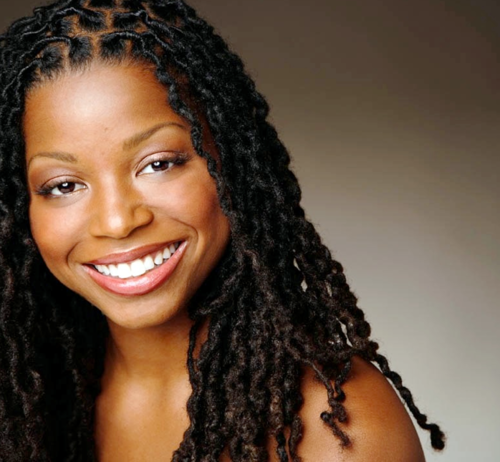
So, you've been thinking of making dreads for how long? a month, two, three, a year, since you can remember? OK so now you've made up your mind and ready for it! And until the big day you'd be wondering if there is anything you could do to prepare your hair for the big change! Here are a few tips:

1) Stop using conditioner
Your hair needs to be the opposite of soft to lock in the best of ways.

2) If you are thinking of dying your hair, do it before the dreads
The chemicals from the dye or the bleach will actually help your hair lock easier

3) Start using a residue-free shampoo
Your hair will already have to deal with the new dreadlock style, so at least the shampoo will not be another new thing to deal with.

4) Avoid hair sprays, wax, gel, etc
These are not the type of chemicals that do your hair or scalp any good. Quite the contrary. With the introduction of your imminent dreadlocks, you cannot afford having dirty hair or a flaky scalp.

5) Decide what kind of locks suit you
Consider your hair type and also your face shape. You could browse images of different people with dreadlocks to figure out what thickness of locks you want. If you have large volume of hair you can choose 100 super thin locks or 50 thicker ones. Also, ask yourself if your hair is long enough - dont forget that the length will decrease during the dreadlock process. If it is not, decide if you will be happy with short locks or if you want to opt for extensions. You can also use extension hair to increase the thickness of the locks.

6) Research
You will need to understand what is the best way to maintain your dreads once you have them. Prepare a set of questions to ask your loctician, check out forums and specialized websites about the best way to wash them, dry them, keep them good looking and good smelling. Get yourself informed.

Last but not least, make sure to motivate yourself for the maintenance and patience that you will need to give to your dreads.The first 6-12 months will be the toughest. Your hair will need to recover from the initial shock and adjust itself to its new style. Be ready for surprises - sometimes dreadlocks take a life of their own. No matter how much research you do and how many people you talk to, remember that every individual is unique and therefore every case is different.
You will probably notice that I have not included the point where you decide what kind of method you want to make dreadlocks with, as I believe that the best way is the crochet technique and strongly discard all the others - unless you have that kind of rough hair and you go for the neglect/natural method.

However you definitely need to decide WHO will do your dreadlocks. Make sure you choose your loctician very carefully. He or she has to be someone who is able to show you samples of previous works, and let you have comments from previous customers. Do you think it is a good idea to economize on your hair health and appearance? I don't think so! So be careful of cheap amateurs. Go for a professional loctician. And once you have found someone with a proven track record of excellence and customer satisfaction, you know your hair is in good hands.
Go for the ride!
1) Stop using conditioner
Your hair needs to be the opposite of soft to lock in the best of ways.
2) If you are thinking of dying your hair, do it before the dreads
The chemicals from the dye or the bleach will actually help your hair lock easier
3) Start using a residue-free shampoo
Your hair will already have to deal with the new dreadlock style, so at least the shampoo will not be another new thing to deal with.
4) Avoid hair sprays, wax, gel, etc
These are not the type of chemicals that do your hair or scalp any good. Quite the contrary. With the introduction of your imminent dreadlocks, you cannot afford having dirty hair or a flaky scalp.
5) Decide what kind of locks suit you
Consider your hair type and also your face shape. You could browse images of different people with dreadlocks to figure out what thickness of locks you want. If you have large volume of hair you can choose 100 super thin locks or 50 thicker ones. Also, ask yourself if your hair is long enough - dont forget that the length will decrease during the dreadlock process. If it is not, decide if you will be happy with short locks or if you want to opt for extensions. You can also use extension hair to increase the thickness of the locks.
6) Research
You will need to understand what is the best way to maintain your dreads once you have them. Prepare a set of questions to ask your loctician, check out forums and specialized websites about the best way to wash them, dry them, keep them good looking and good smelling. Get yourself informed.
Last but not least, make sure to motivate yourself for the maintenance and patience that you will need to give to your dreads.The first 6-12 months will be the toughest. Your hair will need to recover from the initial shock and adjust itself to its new style. Be ready for surprises - sometimes dreadlocks take a life of their own. No matter how much research you do and how many people you talk to, remember that every individual is unique and therefore every case is different.
You will probably notice that I have not included the point where you decide what kind of method you want to make dreadlocks with, as I believe that the best way is the crochet technique and strongly discard all the others - unless you have that kind of rough hair and you go for the neglect/natural method.
However you definitely need to decide WHO will do your dreadlocks. Make sure you choose your loctician very carefully. He or she has to be someone who is able to show you samples of previous works, and let you have comments from previous customers. Do you think it is a good idea to economize on your hair health and appearance? I don't think so! So be careful of cheap amateurs. Go for a professional loctician. And once you have found someone with a proven track record of excellence and customer satisfaction, you know your hair is in good hands.
Go for the ride!